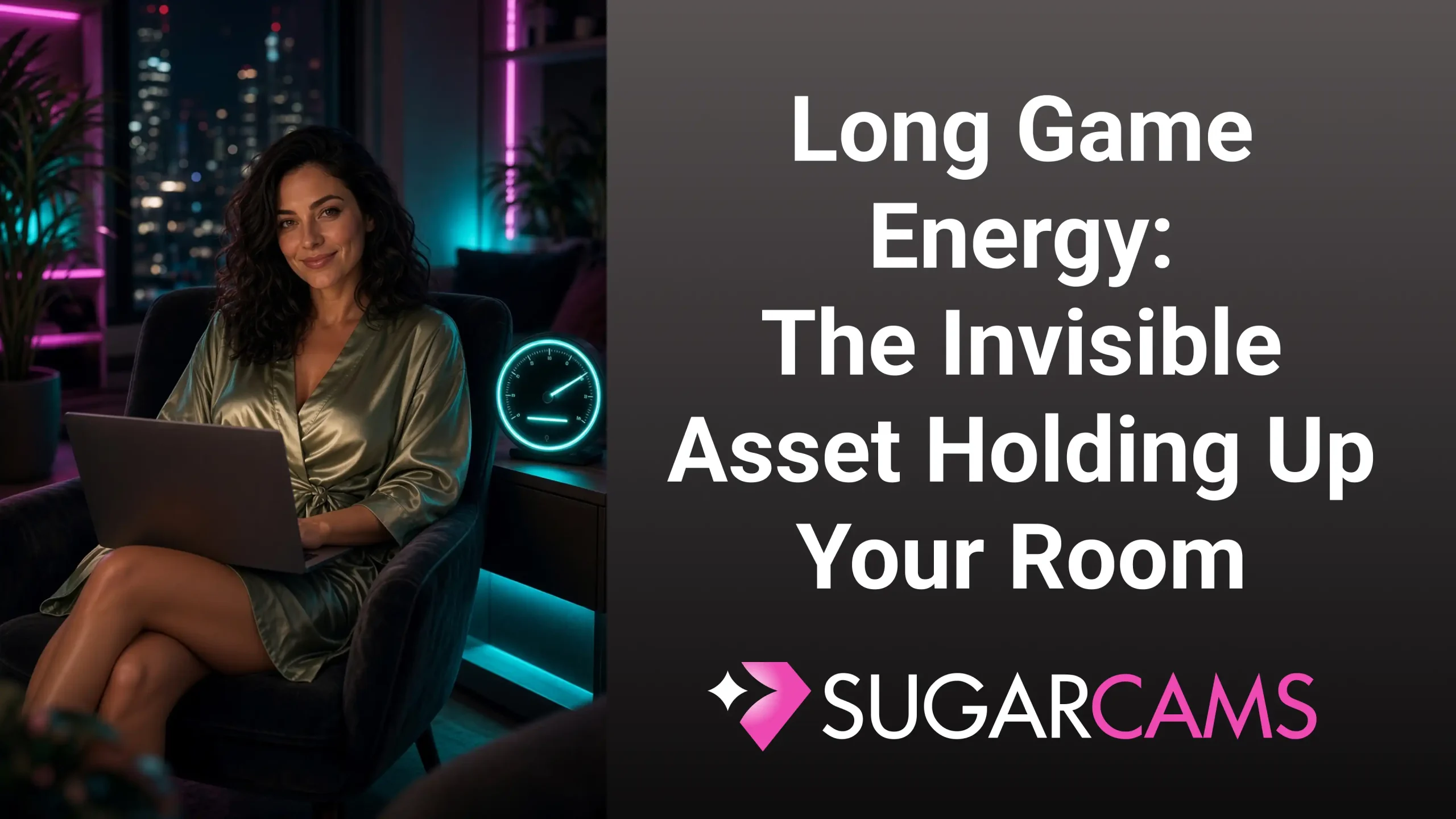
Long Game Energy: The Invisible Asset Holding Up Your Room 🔥✨💎
Hey babes! Right now, the biggest platforms are running entire online events devoted to creator health and wellness, with panels scheduled all day long. Furthermore, the industry support organizations are taking that same message to the international conferences this month. So something has shifted: your downtime is no longer treated as a personal matter, but as a business one. Around here, we call that shift Long Game Energy, and this week we bust it open myth by myth.
In this article, we knock down four beliefs that sound like work ethic and actually cost you money. In addition, we hand you what to do instead, all season long.
Quick note: Long Game Energy is not about going live less. It is about making every hour you are on camera pay what it can actually pay. In fact, your presence is the product, and a drained product shows on camera before you feel it yourself.
What Long Game Energy Is and Why the Industry Is Talking About It
Your room does not sell a catalog: it sells presence. Therefore, the asset you monetize every night is your spark, not your clock. When that spark drops, fans read it in seconds and slip out without a word. As a result, two models with identical hours online can post wildly different numbers. The gap is not effort. It is the state you show up in.
The wider working world already named the opposite of this. Occupational burnout describes exactly the point where working more produces less. Without a doubt, live work is uniquely exposed: you hold energy, conversation, and desire all at once. So protecting your spark is not a luxury. It is maintenance on the one asset you cannot outsource.
Long Game Energy rests on three ideas:
- Your spark is trackable. Your best nights follow a pattern. For example, how you slept, what you did before logging on, and the mood you opened with. Write that pattern down and run it again.
- Recovery is part of the shift. It is not what happens after the work ends. In fact, it is what makes the next shift possible.
- Fans buy state, not schedule. He has no idea how many hours you have been on. That said, he can absolutely tell whether you are present or just logged in.
Four Myths That Are Costing You Money
Myth one: more hours back to back always means more money. Marathon sessions work beautifully as a special event. However, turning them into your daily default flips the result. The last hours of a drained shift barely convert and, on top of that, they leave fans with the weakest impression of the night. On the other hand, that tired version of you is the one they remember.
Myth two: resting means losing money. Here is the trap. Models who rest do not earn less: they concentrate their earnings into the hours that actually convert. For example, one high-spark night pulls more tips than two half-lit ones. Therefore, rest is not competing with your income. It is protecting it. So Long Game Energy starts with getting that difference straight.
Myth three: nobody can tell you are tired on camera. They clock it before anything else. Your reply speed drops, the jokes land late, and your eyes go flat. Consequently, the room empties out and nobody tells you why. In fact, it is the quietest kind of leak in this business.
Myth four: taking care of yourself is for later, once you are earning more. This one is the most expensive of the four. It runs backwards: first you build your Long Game Energy, then the steady money follows. Likewise, the long careers in this industry do not belong to whoever pushed hardest, but to whoever managed herself best. In fact, the babes who stay on top for years tend to run boring, ruthlessly consistent routines.
Maximize Your Earnings With Long Game Energy
Start with your highest-traffic window and arrive whole. Therefore, block the fifteen minutes before it for yourself: no arguments, no errands, no extra screens. That way, your first impression in the room is the strongest one of your day, exactly when new fans are walking in. Without a doubt, that little ritual is the cheapest piece of your whole strategy.
Design your week with intentional peaks and valleys. For example, stack your most demanding shows on your strongest days and let the rest run looser. Likewise, tell your room about that rhythm: fans plan around you once they know when you show up. As a result, you keep steady presence without burning through it, and your Long Game Energy shows in every session.
Turn your Long Game Energy into real room goals. A high-spark show can carry bigger group targets and pull bigger tips. Moreover, run your socials on the same logic: one vertical clip filmed when you actually wanted to film beats five posted out of obligation. You will find more ideas for packing your room on our blog.
Finally, lean on your premium fans. They hold your room up on the slow days, so spoil them with real recognition: a rehearsal photo, a shout-out with their name, or a private message after the show. In fact, that crew is your best safety net and a real part of your Long Game Energy.
💎🔥 Your Spark Is the Business: Treat It Like One
Goddess, nobody earns steadily from an empty tank. Your energy is not the fuel you burn to do the work. It is the product.
This week, look back at your best nights and hunt for the pattern. Then build it on purpose instead of waiting for it to show up on its own. For example, start with one single thing: the fifteen minutes before you log on.
The whole industry is talking about this right now. Go ahead and stay one step ahead of it. 💋✨